Large language models are showing up everywhere in financial services right now. They power customer-facing chatbots, help analysts summarize earnings reports, assist compliance teams with document review, and are increasingly being used to describe, recommend, and explain financial products to consumers. That last use case is where things get interesting — and where the stakes are high enough that compliance professionals need to be paying close attention.
The question of how LLMs represent financial products is not just a technical one. It has real implications for consumer protection, regulatory compliance, and brand trust. When a model describes a mortgage, a personal loan, a credit card, or an investment product, the way it frames that information can be accurate and helpful or misleading and potentially harmful. Understanding where these models fall short is essential context for anyone operating in a regulated financial environment.
What It Means for an LLM to “Represent” a Financial Product
When we talk about how an LLM represents a financial product, we’re talking about how the model understands, describes, and communicates information about that product. This includes the terms, features, risks, eligibility requirements, regulatory disclosures, and comparative context that surrounds a product like a home equity line of credit, a variable-rate personal loan, or a money market account.
LLMs generate responses based on patterns learned during training on massive datasets of text from the internet, books, regulatory filings, and other sources. They do not retrieve live, verified product data unless connected to a retrieval system. That means the way an LLM represents a financial product is largely a reflection of how that product has been described across the text it was trained on — which introduces a set of structural limitations from the start.
How LLMs Learn to Talk About Financial Products
The training process for a large language model involves ingesting enormous volumes of text and learning statistical relationships between words, phrases, and concepts. For financial products, this means the model has likely been exposed to:
- Marketing copy from lenders, banks, and investment platforms
- News articles and financial journalism
- Consumer forums and review sites
- Regulatory filings and government documents
- Academic and research papers on financial topics
- Comparison sites and third-party review platforms
The problem is that not all of these sources are equally accurate, balanced, or current. Marketing copy is designed to present products favorably. Consumer reviews reflect individual experiences that may not generalize. Regulatory documents are dense and context-dependent. When a model synthesizes all of this into a response, the output is a blended representation that may lack precision, understate risk, or reflect a positively skewed picture of a given product type.
Where LLM Representations of Financial Products Break Down
Hallucination and Fabricated Product Details
One of the most significant risks in how LLMs describe financial products is hallucination — the tendency for models to generate plausible-sounding but factually incorrect information with apparent confidence. In financial services, this is not a minor inconvenience. A chatbot that confidently states an incorrect APR, fabricates an eligibility requirement, or misrepresents the terms of a loan product can cause real harm to consumers and real liability for the institution behind it.
Hallucinations in financial contexts can take several forms: incorrect rate information, invented product features, or false comparisons between competing products. The challenge is that these outputs are often fluent and well-structured, making them difficult for non-expert users to detect.
Outdated and Knowledge-Cutoff Limitations
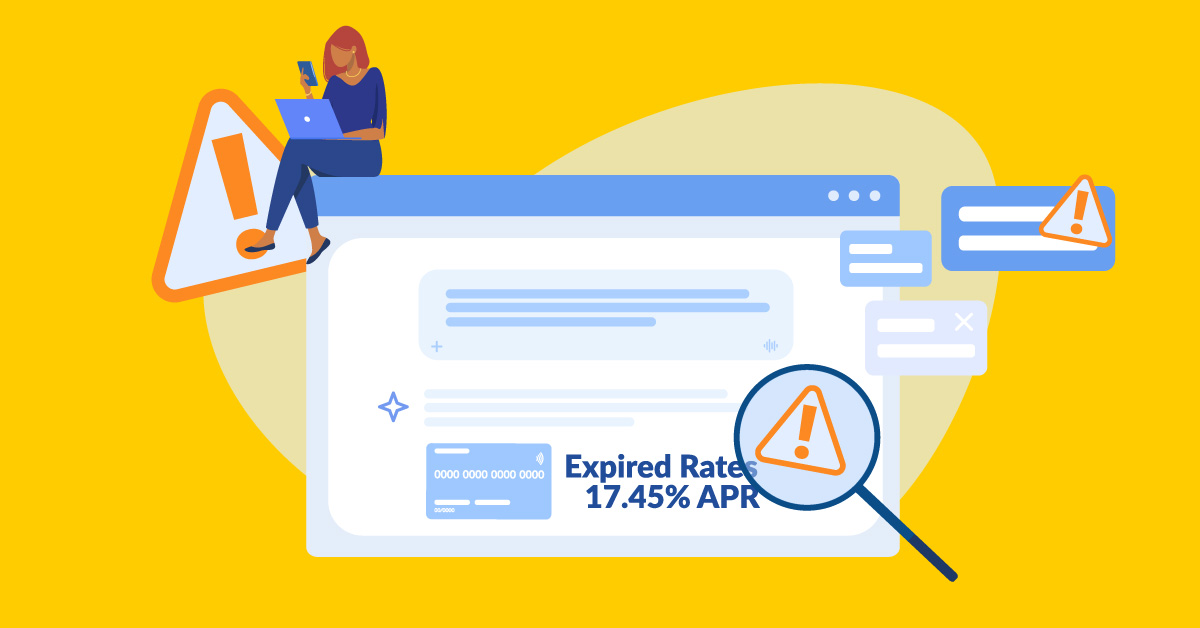
LLMs are trained on data up to a certain point in time and do not automatically update with new information. In a product landscape that shifts regularly — with rate changes, policy updates, new regulatory requirements, and product discontinuations — this creates a meaningful accuracy gap. A model with a training cutoff from months ago may describe a product that no longer exists in the same form or apply outdated regulatory guidance as if it were current.
Product Bias and Favoritism
Research has identified a pattern where LLMs consistently favor certain financial products, brands, or institutions in their outputs — not because those products are objectively superior, but because they appear more frequently in training data. Larger, more publicly prominent companies receive more coverage in financial news, analyst reports, and online discussion, which means they are better represented in training corpora. A model asked to recommend investment vehicles or compare loan products may systematically favor well-known names not based on merit but based on how frequently those names appeared in its training data.
Overconfidence and Missing Disclosures
LLMs are trained to be helpful and direct — but in financial services, helpful and compliant are not always the same thing. When a consumer asks about a credit card’s APR, a compliant answer includes the range, the factors that determine where a consumer lands, and the required disclosure language. When they ask about fees, a compliant answer acknowledges exceptions, conditions, and variability. LLMs routinely skip all of that. They produce confident, readable responses that answer the surface question while stripping out the qualifications that would make that response appropriate in a regulated context. For products where individual suitability matters — credit cards, HELOCs, personal loans, deposit accounts — that gap between a satisfying answer and a compliant one is where the risk lives.
How LLMs Handle Specific Financial Product Categories
Lending Products: Mortgages, Personal Loans, and Lines of Credit
LLMs can generally describe the broad mechanics of lending products with reasonable accuracy — fixed versus variable rates, secured versus unsecured structures, and the role of credit scores in qualification. Where they struggle is in the specifics: current rate environments, lender-specific terms, income and DTI thresholds, and the regulatory disclosures required under laws like TILA (Truth in Lending Act). An LLM describing a mortgage without prompting appropriate disclosures or acknowledging jurisdiction-specific rules is not giving consumers the full picture.
Credit Cards and Deposit Accounts
For credit cards and deposit products, LLMs tend to describe general features accurately but struggle with comparative accuracy, promotional terms, and the nuances of reward structures. Describing a cash-back card’s earning rate, annual fee justification, or foreign transaction policy in a way that is both accurate and appropriately qualified requires up-to-date, product-specific knowledge that generic LLMs do not reliably have.
Investment Products: Stocks, Funds, and Retirement Accounts
Investment product representation is one of the highest-risk areas for LLMs. Models may discuss investment options in ways that function as implicit recommendations without the appropriate licensing, disclosures, or suitability analysis. There is documented evidence of models favoring specific stocks and funds — not based on current performance or individual investor profiles but based on the prominence of those products in historical training data.
Insurance Products
Insurance is one of the most complex product categories for LLMs to represent accurately. Coverage specifics, exclusion clauses, state-by-state regulatory variation, and the interaction between primary and supplemental policies are all areas where models frequently produce oversimplified or inaccurate descriptions.
The Compliance Implications of AI-Generated Financial Product Content
For compliance teams, the way LLMs represent financial products raises a set of questions:
- Who is responsible when a consumer acts on inaccurate AI-generated product information?
- How are AI-generated product descriptions being reviewed and approved before they reach consumers?
- Are the outputs of customer-facing LLM tools subject to the same marketing compliance review as other consumer-facing content?
- How are institutions documenting and auditing what their AI systems are saying about their products?
These are not hypothetical concerns. Regulators including the CFPB, FTC, and SEC have all signaled that AI-generated content and responses are subject to existing consumer protection and disclosure requirements. An institution that lacks oversight of how their brand and products are represented in AI platforms like ChatGPT, Claude, and Gemini is taking on compliance risk whether it recognizes it or not. If you’re still evaluating where AI fits in your compliance program, this breakdown of why financial services companies are adopting AI in marketing compliance is a good starting point.
What Good LLM Product Representation Looks Like
The gap between generic LLM outputs and compliant, accurate financial product representation is real — but it is not insurmountable. Organizations working toward responsible deployment are typically doing several things:
- Using retrieval-augmented generation (RAG) to ground model outputs in verified, current product data rather than relying on training data alone
- Implementing model guardrails that require appropriate disclosures and caveats when specific product types are discussed
- Conducting regular audits of AI-generated output against actual product terms and regulatory requirements
- Treating AI-generated consumer communications as a compliance artifact that requires the same review and approval workflow as any other marketing or disclosure content
The analogy to traditional compliance workflows is apt: just as a product brochure or advertisement would go through legal and compliance review before reaching consumers, AI-generated product descriptions should follow the same path. The speed and scale at which LLMs can produce content does not change the obligation to ensure that content is accurate and compliant.
That’s exactly what AI Response Monitor is built for. PerformLine continuously monitors, evaluates, and scores AI-generated responses about your brand, products, and competitors across platforms like ChatGPT, Gemini, and Claude—so your compliance team always knows what those channels are saying, and has a structured path to act when something is wrong.
FAQs: How LLMs Represent Financial Products
The primary risks are hallucination, outdated information, and product bias. Hallucination means the model generates factually incorrect details — a wrong rate, a fabricated fee, a misrepresented eligibility rule — with confident, fluent language that makes errors hard to catch. Outdated information is a problem because LLMs have training cutoffs and don’t update in real time, so product terms or regulatory requirements may have changed since the model was last trained. Product bias means models tend to favor more frequently discussed brands and products in their outputs, which can skew the picture consumers receive.
LLMs can provide generally accurate descriptions of financial products in broad terms, but they are prone to errors in specifics — including rates, terms, eligibility requirements, and regulatory disclosures. Their accuracy is limited by training data cutoffs, representational bias toward prominent brands, and a tendency to produce confident-sounding outputs even when information is incomplete or incorrect.
LLM outputs related to financial products are subject to existing consumer protection regulations, even if AI-specific rules are still evolving. Agencies like the CFPB, FTC, and SEC have made clear that the use of AI does not exempt institutions from disclosure obligations, fair lending requirements, or truth-in-advertising standards. Institutions deploying LLMs for consumer-facing financial communications should be treating those outputs as subject to standard compliance review.
Hallucination refers to instances where an LLM generates information that sounds authoritative and well-constructed but is factually incorrect or entirely fabricated. In financial services, this can mean a model states an incorrect interest rate, invents a product feature, or misrepresents a regulatory requirement. Hallucination is one of the most significant risks associated with LLM deployment in regulated industries.
LLMs learn to describe financial products based on patterns in their training data, which typically includes marketing copy, news articles, consumer reviews, and regulatory documents. This means they tend to reflect the language and framing of those sources — which can include promotional bias, outdated information, and disproportionate coverage of larger, more widely discussed institutions. The quality and balance of training data directly shapes how accurately a model represents any given product.
Product bias refers to the tendency of LLMs to consistently favor or more prominently represent certain financial products, brands, or institutions in their outputs — not because those options are objectively superior, but because they appear more frequently in training data. This can affect investment recommendations, product comparisons, and descriptive content in ways that may disadvantage consumers and raise fairness concerns.
Keeping AI in Check in Financial Services
The way LLMs represent financial products matters for consumers trying to make informed decisions, for institutions managing regulatory risk, and for compliance teams tasked with ensuring that every piece of consumer-facing communication meets the applicable standards.
PerformLine continuously monitors, evaluates, and scores AI-generated responses about your brand, products, and competitors — so you always know what those channels are saying, and what to do about it. As LLMs become more embedded in how financial institutions interact with consumers and describe their products, the need for robust compliance monitoring becomes more urgent, not less. Whether your team is already deploying AI in customer-facing workflows or evaluating where it fits, building a compliance framework around that content is not optional. See exactly how AI responds when consumers ask about your brand and products.