AI Is a Marketing Channel. Your Compliance Program Needs to Treat It Like One.


Why your next examiner question may be about ChatGPT.
Your compliance program monitors what affiliates say about your products. You audit call center scripts. You review every digital ad against your disclosure requirements. But somewhere between ChatGPT, Gemini, and Perplexity, a new marketing channel has quietly opened — and most compliance programs haven’t caught up.
ChatGPT alone reached 900 million weekly active users by early 2026. That’s not a niche platform; it’s one of the largest information sources on the internet. Nearly 80% of Americans now use AI tools, and a majority rely on them to help make financial decisions. Your potential customers are asking ChatGPT about your rates, your fees, your licensing, and your terms before they ever touch your website.
And some of what AI tells them is wrong.
Why AI Is a Different Kind of Channel
You already know how to monitor marketing channels. Affiliate networks get audited. Email campaigns get reviewed. Digital ads get checked against disclosures. That’s table stakes.
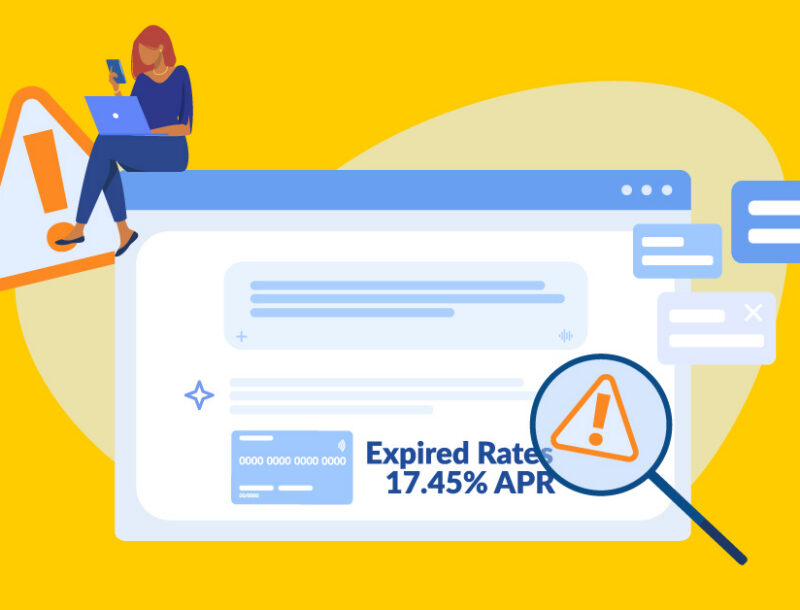
AI platforms are different because they operate at a scale no human team can review, with no named author, no approval workflow, and no edit button. There’s no CMS to pull a bad page from. There’s no partner to email. There’s just an answer — generated in real time, from a model trained on public web content that included your brand.
And here’s the part compliance leaders need to hear clearly: you have a potential compliance problem the moment inaccuracy reaches a consumer.
The CFPB has already signaled its position. Existing consumer protection laws apply to AI with no exceptions. The Bureau specifically notes that chatbots and other automated systems built on large language models can “provide inaccurate information and increase risk of unfair, deceptive, and abusive practices.” Under UDAAP and fair lending laws, if a consumer makes a financial decision based on inaccurate information about your product — regardless of who generated it — you have potential exposure. The regulatory question is not about authorship. It’s about consumer harm and what you did to prevent it.
Hallucinations Aren’t Rare in Our Industry
AI language models don’t look things up. They generate responses based on patterns in training data. That’s exactly why they can produce confident, well-written, grammatically clean answers that are completely wrong.
Recent research puts general-purpose hallucination rates at roughly 0.7–1.5% on grounded tasks — low, but meaningful when you’re processing millions of consumer queries. More alarming, when the same models are asked legal or regulatory questions, hallucination rates have been measured between 69% and 88%. Financial services sits squarely in that high-risk zone.
The errors most likely to show up in AI responses about regulated financial products are exactly the ones your compliance team already spends its days looking for: outdated rates, fees, or terms from older training data; incorrect claims about licensing status or state availability; inaccurate comparisons pulled from stale competitive marketing; language from affiliate or partner content that was indexed before removal; and overstated claims about approval odds, timelines, or product eligibility.
Every one of those is potential consumer harm. Every one of those is regulatory exposure.
AI Sits Between Marketing and Compliance — and Both Teams Own Something Here
Most marketing channels have clean ownership. Paid media lives with marketing. Affiliate and partner programs sit between marketing and compliance. Call center scripts live with operations and compliance. AI doesn’t fit neatly into any of those boxes — which is exactly why it has been no one’s job.
The moment a consumer makes a financial decision based on AI-generated misinformation about your product, you have a potential UDAAP issue, a potential disclosure failure, or a potential unfair or deceptive practice claim. “We didn’t create that content” does not travel well in a regulatory conversation. What matters is that you knew the channel existed, you knew the risk existed, and you either monitored it or you didn’t.
That’s why marketing and compliance need to be in the same room on this one. Marketing understands the brand surface area — which affiliates, which partner programs, which owned content is actually feeding the models. Compliance owns the risk framing, the evidence trail, and the regulator-facing defense. Neither team can close this gap alone.
Closing the gap proactively is materially different from explaining to an examiner why your monitoring program had a blind spot. The mindset shift is simple: AI is a marketing channel, and it needs the same rigor as every other channel you already monitor.
What Compliance-Grade AI Response Monitoring Actually Looks Like
You don’t need to rebuild your compliance program. You need to extend it.
AI Response Monitoring — the discipline of systematically monitoring what AI platforms say about your brand, products, and competitors — uses the same principles as affiliate monitoring and digital advertising oversight. The practical workflow is familiar.
Systematic querying. Your team, or a monitoring platform, regularly submits the questions consumers actually ask to major AI platforms. “What are the rates for [product]?” “Is [your company] licensed in [state]?” “How does [your company] compare to [competitor]?” This is ongoing, not a one-time audit.
Documentation and evidence packaging. Every response is captured, dated, and stored. When AI generates content with regulatory implications — UDAAP concerns, fabricated disclosures, discriminatory language — full evidence is packaged for compliance review. That’s the audit trail examiners want to see.
Root-cause evaluation. Captured inaccuracies get reviewed against your approved product descriptions and compliance standards. Sometimes the finding is a monitoring rule that needs refinement. More often, the inaccuracy traces back to something in your own digital ecosystem — a stale page on your site, old affiliate creative, partner marketing that never came down — that the model learned from.
Structured corrections. Major AI providers accept structured correction submissions with source references. When you identify a factual error, you submit corrected information with documentation. You now have a documented remediation trail.
Identify high-risk queries, set a review cadence, capture findings, trace errors to source, remediate, document the fix. If that sequence sounds like your third-party monitoring program, it should. It’s the same program — just extended to a new channel.
AI Advertising: The Next Compliance Layer
The monitoring challenge is already getting harder. AI platforms are monetizing. ChatGPT launched advertising in early 2026, and Google continues to expand paid placements inside AI Overview results. That raises a new set of compliance questions your program needs to answer.
When competitors pay to appear in AI responses about your products, what disclosure requirements apply? What’s your liability when an affiliate’s paid placement inside a chatbot includes language your compliance team never reviewed? How do you audit sponsored content that appears alongside organic AI responses?
These aren’t new questions. They’re your existing digital advertising compliance framework applied to a new surface. The channel is new; the requirements are not.
Frequently Asked Questions
Regulators including the CFPB treat AI-generated consumer communications the same way they treat any other marketing channel. If a consumer makes a financial decision based on inaccurate AI-generated information about your product, existing consumer protection laws — including UDAAP — apply regardless of who generated the content.
AI compliance monitoring is the practice of systematically tracking what AI platforms like ChatGPT, Gemini, and Perplexity say about your brand, products, and services, then reviewing those responses against your approved disclosures, product terms, and regulatory standards. It is the same discipline as affiliate or digital advertising monitoring, applied to a new channel.
The CFPB has stated that existing consumer protection laws apply to AI with no exceptions. The Bureau specifically identifies chatbots and large language model systems as capable of providing inaccurate information that increases the risk of unfair, deceptive, and abusive practices under UDAAP and fair lending laws.
General-purpose hallucination rates run roughly 0.7 to 1.5% on grounded tasks — low in isolation, but significant at the scale of millions of consumer queries. When AI models are asked legal or regulatory questions specifically, hallucination rates have been measured between 69% and 88%, putting financial services content in a high-risk category.
Both. Marketing understands the brand surface area — which affiliates, partner programs, and owned content are feeding the models. Compliance owns the risk framing, the evidence trail, and the regulator-facing documentation. Neither team can close this gap without the other, which is why AI monitoring requires a shared ownership model.
You cannot directly edit what AI platforms say about your brand, but you can influence it over time. Major AI providers accept structured correction submissions with source documentation. More importantly, inaccurate AI responses typically trace back to stale or non-compliant content in your own digital ecosystem — your website, affiliate creative, or third-party partner marketing — that the model trained on. Cleaning that source content is the most durable correction available.
When an AI platform generates a response that misrepresents your product terms, fees, licensing status, or eligibility criteria, and a consumer relies on that information to make a financial decision, you have a potential UDAAP exposure. Regulators focus on consumer harm and whether you had controls in place — not on whether your organization authored the content.
How PerformLine Is Closing the Loop
Here’s the insight most compliance teams miss: you can’t control what AI says about your brand, but you absolutely control what AI learns from.
AI models train on publicly available web content. Your website. Your affiliate network. Your third-party partner marketing. Your old ad copy that’s still cached somewhere. When AI generates inaccurate claims about your products, odds are those claims came from somewhere in your own digital ecosystem that no one was actively managing.
That’s exactly where PerformLine’s omni-channel platform already lives. We discover compliance risk at the source — your owned pages, your affiliate networks, your third-party partner marketing — and surface what’s inaccurate, outdated, or non-compliant. For any AI Response Monitoring program, that back-of-house work is the foundation. Without clean source content, any monitoring layered on top is fighting a losing battle.
Extending that same discipline to the AI surface is the natural next step, and it’s where a growing share of our work is headed. Same workflows. Same audit trails. Same rigor as the programs your team already runs.
The Window Is Narrowing
The CFPB and other financial regulators are already examining AI use in consumer-facing contexts. As AI becomes a primary way consumers learn about financial products, regulators will increasingly expect evidence that companies monitor what’s being said about their products across every channel — including AI platforms.
The question isn’t whether AI Response Monitoring becomes a compliance expectation. It’s whether you close this gap before or after a regulator asks how you’re monitoring it.