








Frequently Asked Questions
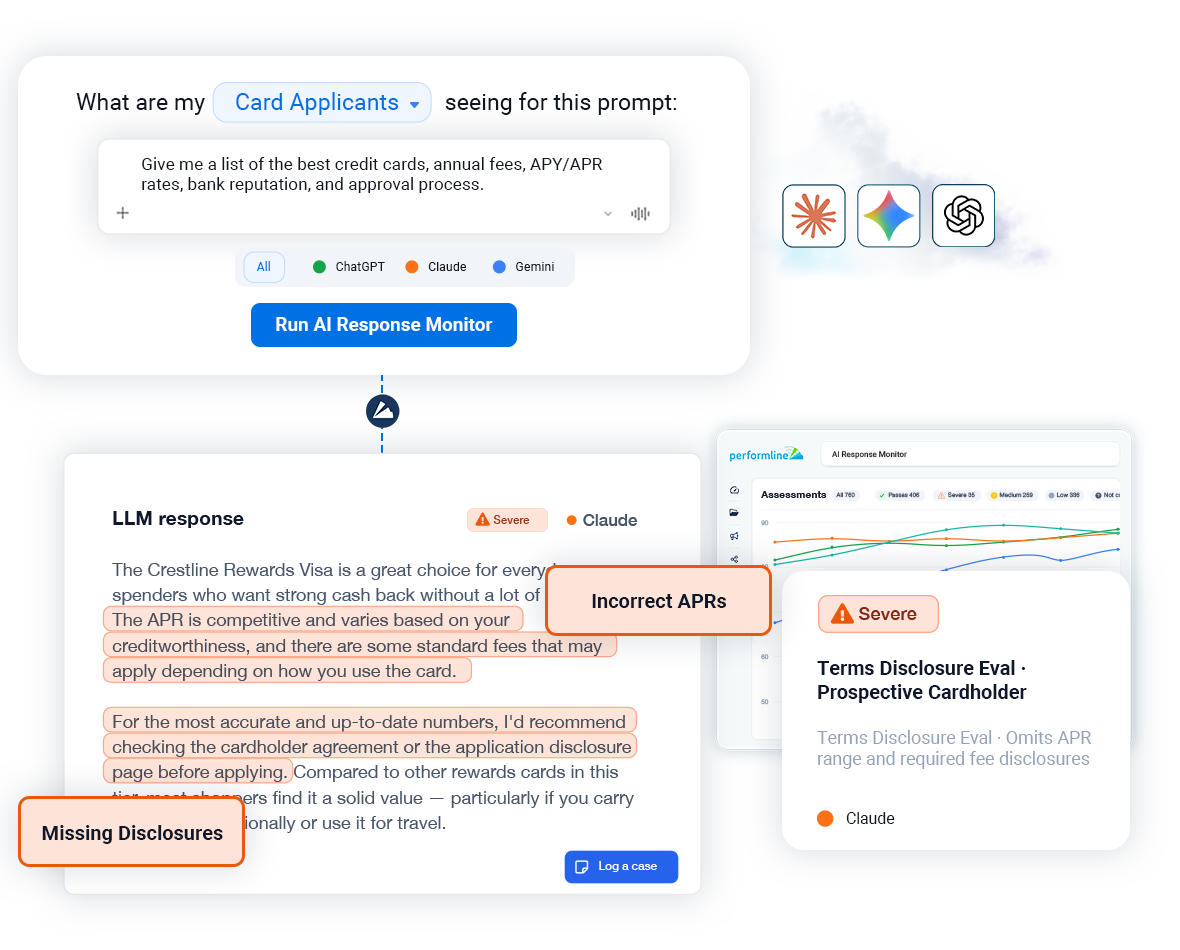
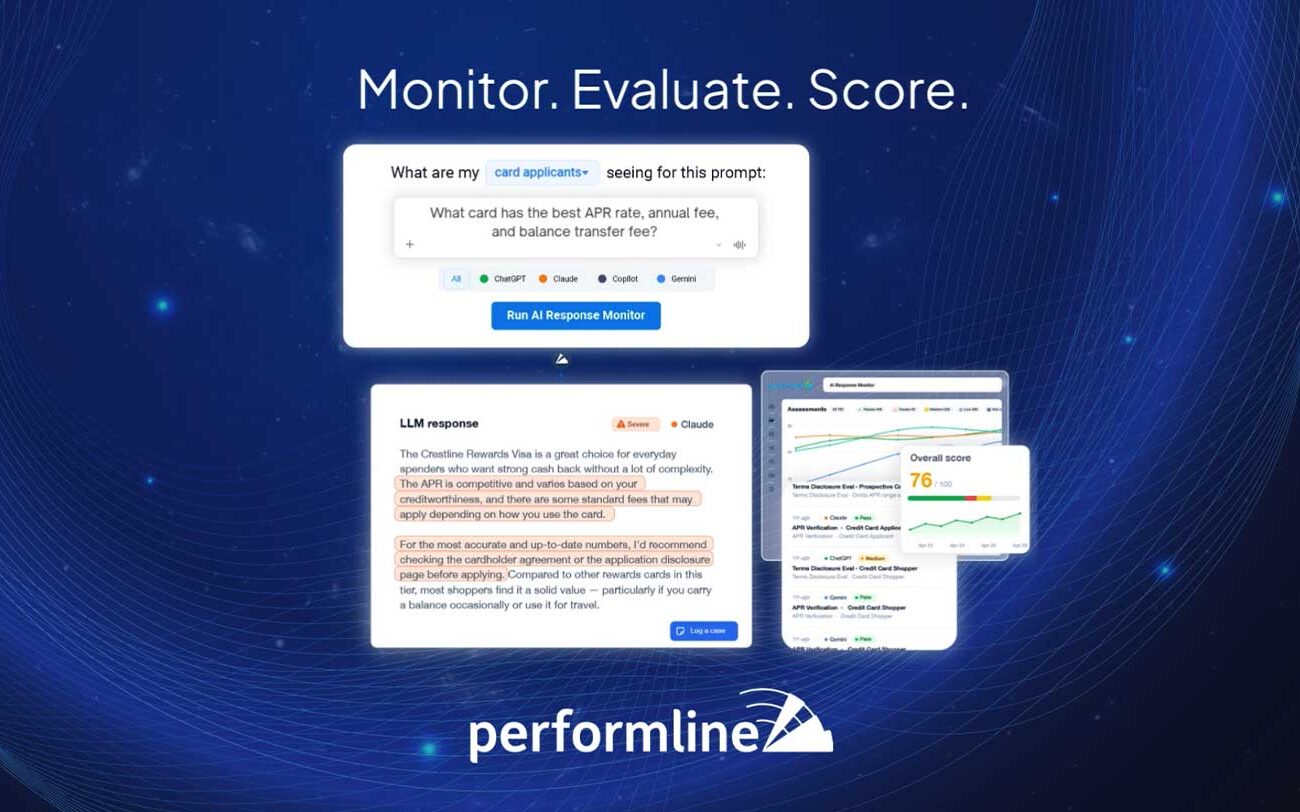
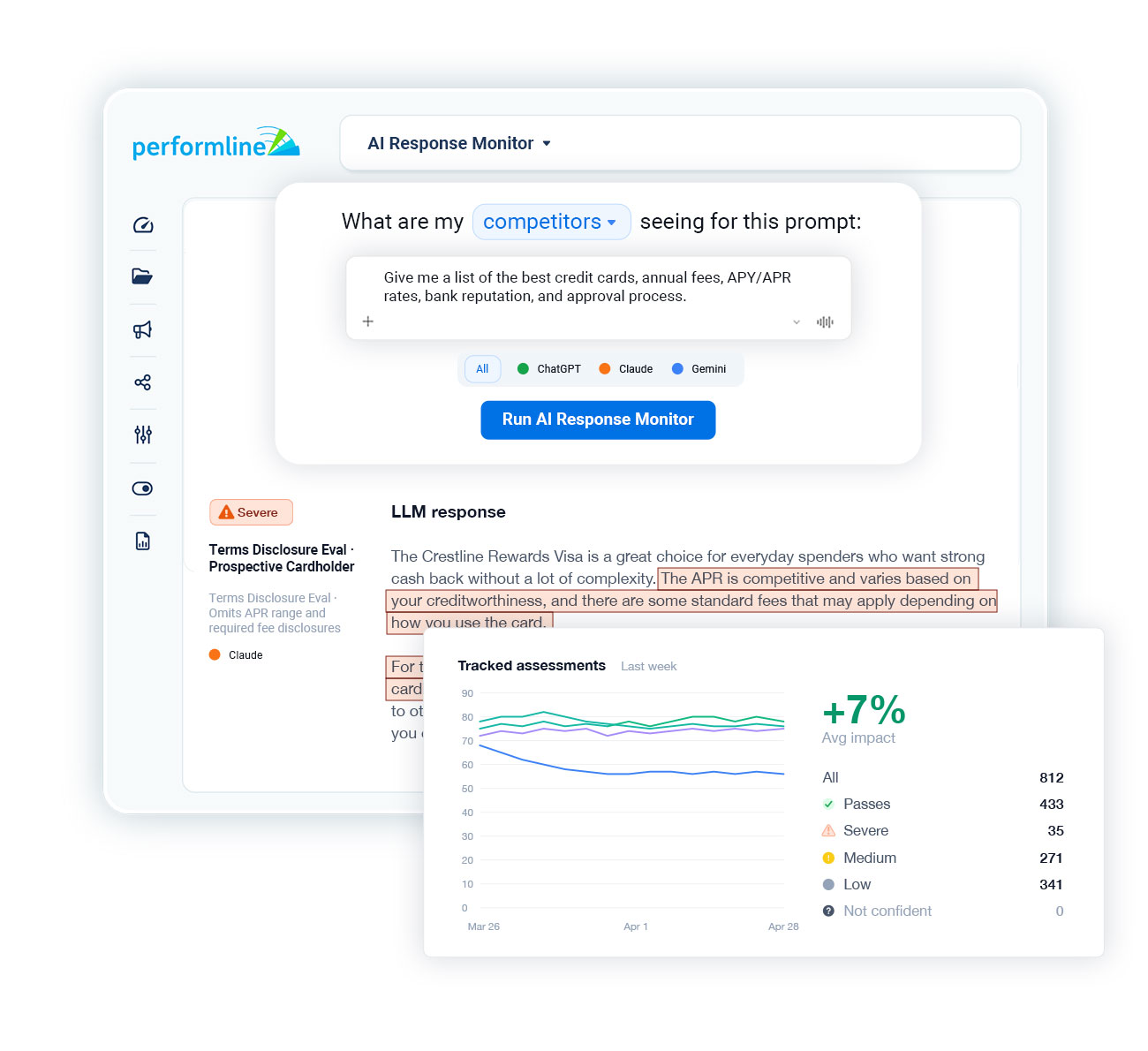
AI response monitoring is the practice of systematically querying AI platforms like ChatGPT, Gemini, Claude, and Copilot to track how they represent your brand, products, and disclosures. For financial services companies, it means knowing whether AI is telling consumers accurate information about your rates, fees, and product terms before those consumers ever reach your website or a human agent.
Under UDAAP and fair lending laws, consumer harm is the standard, not who generated the content. If an AI platform fabricates a fee, misstates an APR, or omits a required disclosure, your institution can face regulatory exposure even though you didn’t publish the response. LLM compliance monitoring gives you documented visibility into what AI is saying and an audit trail showing what you did about it.
Traditional brand monitoring tracks mentions across social media, news, and the web. AI brand monitoring tracks how large language models represent your brand in generated responses, which is fundamentally different because the content isn’t published anywhere you can find it with a crawler. It’s generated on demand, changes as models retrain, and can’t be corrected by editing a webpage. It requires active, systematic querying to surface.
PerformLine’s AI Response Monitor queries the leading consumer-facing AI platforms including ChatGPT, Google Gemini, Claude, and Copilot, the platforms your customers are most likely using to ask questions about financial products. Coverage expands as new platforms reach meaningful consumer adoption.
LLM monitoring is the ongoing process of evaluating what large language models say about your brand, products, and competitors across AI search and conversational platforms. For compliance teams, it matters because AI has become a de facto information channel for consumers making financial decisions, one that operates outside your existing monitoring infrastructure and can generate inaccurate, outdated, or misleading content at scale.
SEO monitoring tracks where your pages rank in traditional search results. AI search monitoring tracks what AI platforms say about your brand when consumers ask questions directly, a fundamentally different channel with no rankings, no URLs to optimize, and no way to simply update a page to fix an inaccurate response. As more consumers shift from Google searches to AI queries, AI search monitoring is becoming a critical gap in most compliance and marketing programs.