Pre-Publication
Product Announcements
Inside Pre-Publication Scanner: How PerformLine Catches Issues Before They Go Live

Marketing compliance review has a timing problem. For most teams, review happens at the end of the process, after the creative is built, the campaign is scheduled, and the deadline is looming. And increasingly, it happens after content is already live, which is the most expensive place to catch a problem, because by then a violation is already exposure.
At the same time, marketing is producing more than ever. AI tools, affiliates, and partners are generating creative faster than any manual review process was built to handle, across more channels than a single team can reasonably keep up with. The volume goes up, the timelines get shorter, and the regulatory exposure stays exactly where it has always been: on the institution.
Pre-Publication Scanner is our answer to that problem. It is the next generation of PerformLine’s pre-publication review, and it moves the first look at compliance all the way upstream, to the moment content is created.
What it does
Pre-Publication Scanner lets a marketer scan their own asset for compliance before it ever reaches the review queue. Upload a piece of creative, a flyer, a landing page, a social post, a disclosure, even video, and the scanner evaluates it against the regulations that apply to the institution and its brand guidelines at the same time. The obvious issues get caught and fixed at the first draft, so the compliance team spends its expert time on the findings that genuinely need human judgment, not the routine ones that should never have reached them.
The result is a different working relationship between two teams that usually feel friction: velocity for marketing, and control for compliance.
How it works under the hood
What makes the scanner different is that it reads content the way an experienced reviewer would, for meaning and context, rather than scanning for exact keywords.
That distinction matters more than it sounds. Compliance rarely comes down to a single banned phrase. It lives in the near-misses, the paraphrases, and the claims that are technically true but misleading in context. A keyword check misses those. Context-aware analysis catches them, along with the everyday copywriting issues, misspellings, abbreviations, and reworded claims, that slip past rigid rules.
Review also extends well beyond the written word. Using a combination of OCR, large language models, and natural language processing, the scanner reads and assesses the full asset, including images and visual elements. It checks the prominence of required disclosures, not just their presence, so a disclosure that is technically included but buried in fine print too small to satisfy the requirement gets flagged. It can also evaluate brand elements like color, font, layout, and logo use.
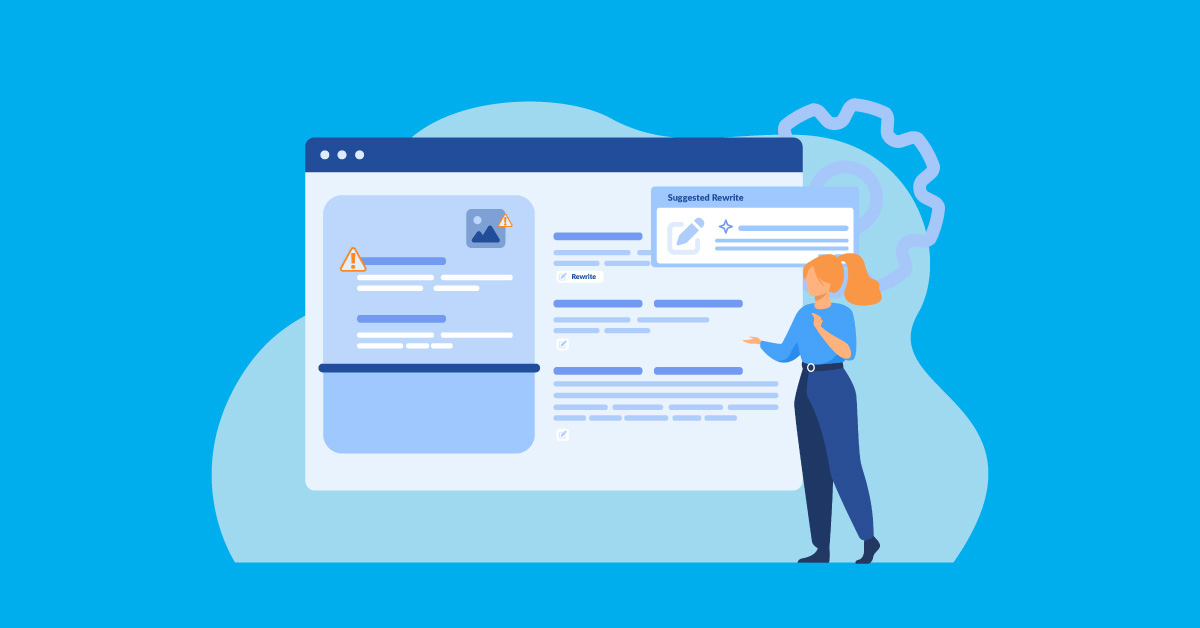
Every finding comes back with the context a reviewer actually needs: what the issue is, where it appears on the asset, why it may be a violation, the regulatory basis behind it, and a suggested compliant rewrite. Each asset receives a 0 to 100 compliance score that maps to a clear pass, warning, or fail verdict, so a marketer knows at a glance what needs attention. They can fix the flagged items, rescan, and repeat until the asset is clean, then hand it off.
When something does need the compliance team, any scan becomes a case in one click, pre-filled with the findings and linked back to the original document, and it moves through the same workflow and audit trail that power the rest of the PerformLine platform.
Why the knowledge behind it matters
An AI system is only as good as the knowledge it is grounded in. Pre-Publication Scanner is informed by more than 15 years of PerformLine’s compliance experience and the patterns we have refined across the most heavily regulated corners of financial services. That depth is what makes the findings accurate and relevant rather than noisy, and it is the difference, for an enterprise, between AI you can trust and AI you have to double-check.
It is also why the scanner is grounded in each institution’s own standards and brand guidelines, not a generic checklist. The assessment reflects how your organization is actually required to speak about its products.
Compliance as an accelerator
The bigger shift here is what happens when review moves to the front of the process instead of the end. Compliance stops being the bottleneck teams wait on and starts being the thing that lets marketing move faster with confidence. Issues get caught while they are still easy to fix, and nothing reaches a consumer without a documented, defensible review behind it.
That is not a faster version of the old process. It is a better one, and it starts before you publish.
To see Pre-Publication Scanner against your own marketing creative, request a demo.
Frequently Asked Questions
The Pre-Publication Scanner uses OCR, large language models, and natural language processing to read visual elements, not just copy. It checks the prominence of required disclosures rather than only their presence, so a disclosure that is technically included but buried in fine print too small to satisfy the requirement gets flagged, along with brand elements like color, font, layout, and logo use.
Each asset receives a score from 0 to 100 that maps to a clear pass, warning, or fail verdict. The score tells a marketer at a glance what needs attention, so they can fix flagged items, rescan, and repeat until the asset is clean before handing it off.
Context-aware analysis reads content for meaning, the way an experienced reviewer would, instead of scanning for exact banned phrases. Compliance issues usually live in near-misses, paraphrases, and claims that are technically true but misleading in context, which a keyword check misses but contextual analysis catches.
An AI system is only as good as the knowledge behind it. Pre-Publication Scanner is grounded in more than 15 years of PerformLine’s compliance patterns refined across heavily regulated financial services, which is what makes findings accurate and relevant rather than noisy, and it is not something a general-purpose AI can replicate overnight.